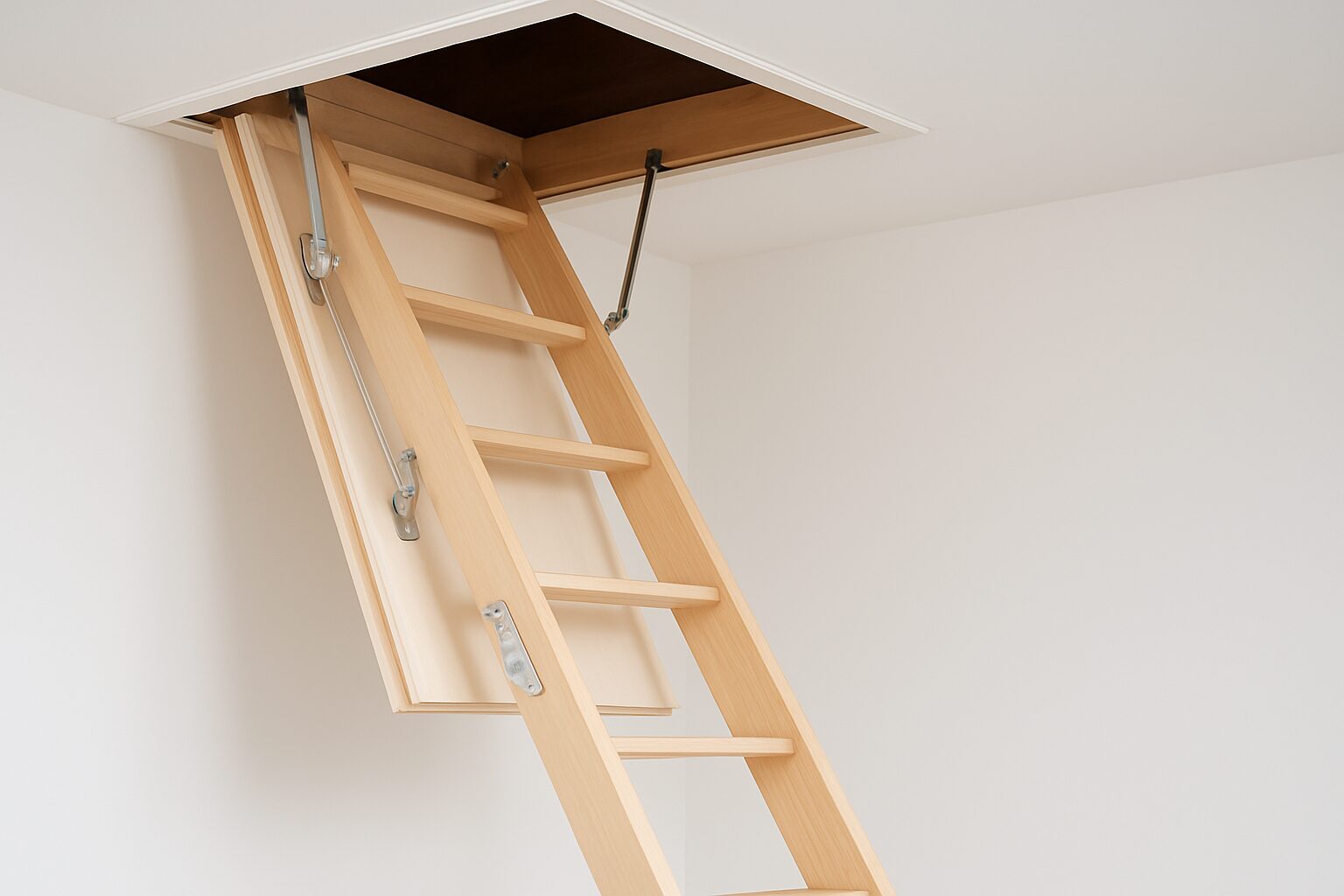
1. What Determines the Cost of Installing a Loft Ladder?
The cost of fitting a Loft Ladder depends on several factors, including the ladder design, ceiling height, hatch dimensions and complexity of the work. Replacing an existing unit may be relatively straightforward, whereas creating a new opening can involve structural alterations, additional materials and finishing work. Homeowners should assess the complete project rather than comparing products solely by their purchase prices.
2. How Do Different Ladder Designs Affect the Budget?
Folding, sliding and telescopic models have different mechanisms and space requirements. Their prices may vary according to materials, load capacity, insulation features and included accessories.
A basic model might suit occasional access, while a more robust system could be appropriate for frequent use. However, the lowest purchase price does not necessarily represent the lowest overall cost if additional components or modifications are required.
Homeowners should compare product specifications, warranty terms and installation requirements before making a decision.
3. Does an Existing Loft Hatch Reduce Installation Expenses?
An existing hatch can simplify installation if its dimensions, position and surrounding structure are compatible with the chosen ladder. In these circumstances, extensive cutting or reconstruction may not be necessary.
However, an old opening may require adjustment, reinforcement or replacement. The condition of the frame and the location of the joists can affect the amount of work involved. A professional assessment helps establish whether the existing arrangement can be retained safely.
4. Which Additional Expenses Should Be Considered?
The total budget may include more than the ladder and installation labour. Depending on the property, additional costs could arise from:
Enlarging or reinforcing the loft opening.
Installing a new hatch or frame.
Repairing ceiling plaster and decorative finishes.
Moving lighting, cables or other services.
Improving insulation around the opening.
Removing waste and completing finishing work.
Not every installation requires these extras, so quotations should identify which services are included and which may incur additional charges.
5. How Can Homeowners Compare Installation Quotations?
Request written quotations from appropriately qualified installers. Each quotation should describe the proposed ladder, labour, materials, preparation, finishing work and any anticipated structural changes.
Comparing equivalent specifications is essential. One estimate might include a complete hatch assembly, while another covers only fitting the ladder. Homeowners should also ask about guarantees, insurance, estimated completion time and arrangements for unexpected problems.
A transparent quotation makes it easier to understand the value offered without relying on headline prices alone.
6. Are Insulation and Energy Efficiency Worth Considering?
Loft openings can contribute to heat loss if the hatch is poorly sealed or inadequately insulated. Where suitable, an insulated hatch and effective draught sealing may help reduce unwanted air movement between the home and loft.
The potential benefit depends on the existing building, insulation levels and quality of installation. Homeowners should avoid covering ventilation routes or altering insulation in ways that could create moisture problems. Advice from a competent professional can help balance energy efficiency with the property’s ventilation requirements.
7. How Can Long-Term Costs Be Controlled?
Choose equipment suited to the expected frequency of use and follow the manufacturer’s maintenance instructions. Periodically inspect hinges, springs, fixings and contact points for damage or unusual movement.
Keeping the mechanism clean and addressing minor defects promptly can help prevent avoidable repairs. Never exceed the specified load capacity or continue using a ladder that appears unstable.
8. Is Professional Advice Useful Before Budgeting?
Yes. A survey can identify structural constraints, access limitations and possible additional work before the project begins. It also helps establish whether building regulations or local building control advice may be relevant.
For UK homeowners, realistic budgeting combines product suitability, installation quality and ongoing maintenance. Understanding these elements in advance makes it easier to plan a safe, practical and cost-conscious loft access improvement.
Key Takeaways
- The cost of fitting a loft ladder depends on various factors including ladder design, ceiling height, hatch dimensions, and the complexity of the work involved.
- Folding, sliding, and telescopic ladder models each have unique mechanisms and price variations based on materials and features, making product comparisons important.
- An existing loft hatch can simplify installation, but may require adjustments or reinforcement based on its condition and structure compatibility with the new ladder.
- Homeowners should consider additional expenses such as enlarging the loft opening, installing new frames, repairing ceiling finishes, and improving insulation when budgeting for loft ladder installation.
- Obtaining written quotations from qualified installers that detail all aspects of the installation can help homeowners effectively compare costs and services.
- Insulated hatches and effective draught sealing can enhance energy efficiency by reducing heat loss, but homeowners should consult professionals to avoid creating moisture problems.